There is a bell at the Undiagnosed Hackathon. When a team finds an answer for a family — a name for the thing that has been happening to their child, their sibling, themselves — someone rings it, and the whole room stops.
I want to tell you about that bell honestly, because the honest version is better than any version I could inflate. But first I have to tell you about a correction that changed how I talk.
The correction
I used to say “rare disease patients” as if it were one group with one story. A coalition leader stopped me mid-sentence once, and the correction stuck: when these families finally get a diagnosis, it will almost always be a rare one — but before they have it, they are undiagnosed. That is its own condition. It has no name to organize around, no foundation, no awareness ribbon, no ICD code. It is the most forgotten corner of a field that is already fighting to be remembered.
I never said it the old way again. Undiagnosed, first — because they are the ones the system is least built to see.
What actually happened, with the receipts
The Undiagnosed Hackathon — organized by the Wilhelm Foundation — exists to point a room full of experts at exactly those families. Here is what the record supports, stated the way I’d want my own numbers stated.
At the first hackathon — hosted by the Karolinska Institute in Stockholm in 2023, the one written up in the medical literature — the teams worked toward answers for ten families. Worked toward, not solved: that distinction matters and the event’s own paper keeps it. By the end of the first day, four families had definitive diagnoses. Four more left with candidate genes — real leads, not yet answers.
At Mayo Clinic in September 2025, 122 experts from 28 countries came together across every specialty you can name and several you probably can’t. The bell rang six times in that room. A seventh rang months later, when one more family’s answer came through after the event ended — because the work doesn’t stop when the chairs are stacked.
And here is the part I’m proudest to report plainly: at the Hyderabad hackathon in early 2026 — the first time the event was held in Asia — the counts don’t perfectly agree. ERDERA’s account records seven bells; one eyewitness account says eight. I’m giving you both numbers instead of picking the bigger one, because a community that counts honestly is worth more than a community with better headlines. When the organizers publish a final count, that’s the number.
Why start with the most forgotten
Two reasons, and neither is sentiment.
First: what you build for the hardest case travels furthest. The tools and shared knowledge a hackathon like this produces don’t evaporate when it ends — captured as shareable context, they can reach clinicians and families anywhere, including places that will never host an event like this. Solve for the family with no name for their condition, and you’ve built something everyone downstream can use.
Second: the undiagnosed teach the field its best habit. Part of the working ethos in this community is leaving every dataset better than you found it — organized, standardized, published so the next researcher doesn’t start from zero. A diagnosis for one family, done right, becomes infrastructure for thousands of families who will never know that team’s name.
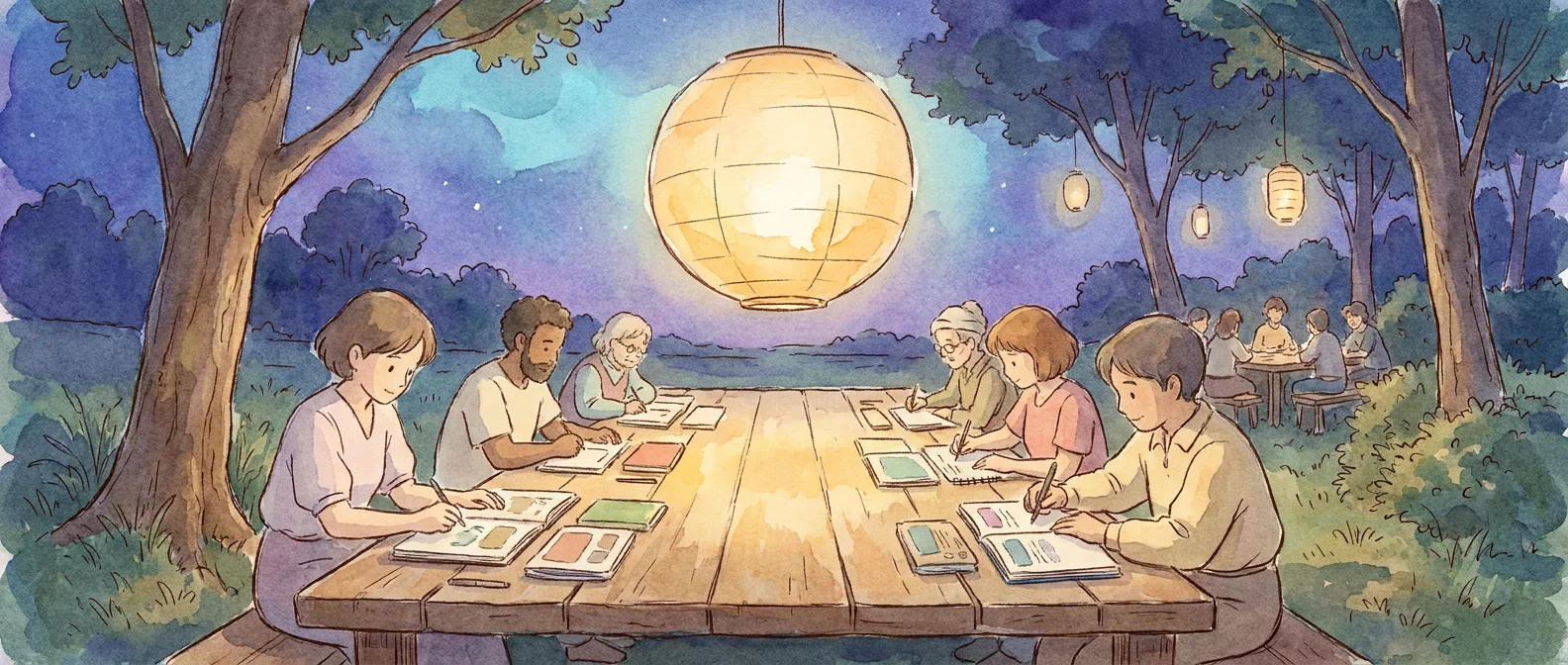
That’s what the bell actually celebrates. Not a miracle — a method. A room where specialists who each hold one piece finally sit at the same table, where the family is a collaborator instead of a case file, and where the numbers are real because the trust is.
The bell will ring again. When it does, I’ll tell you the count — and if two people counted differently, I’ll tell you that too.