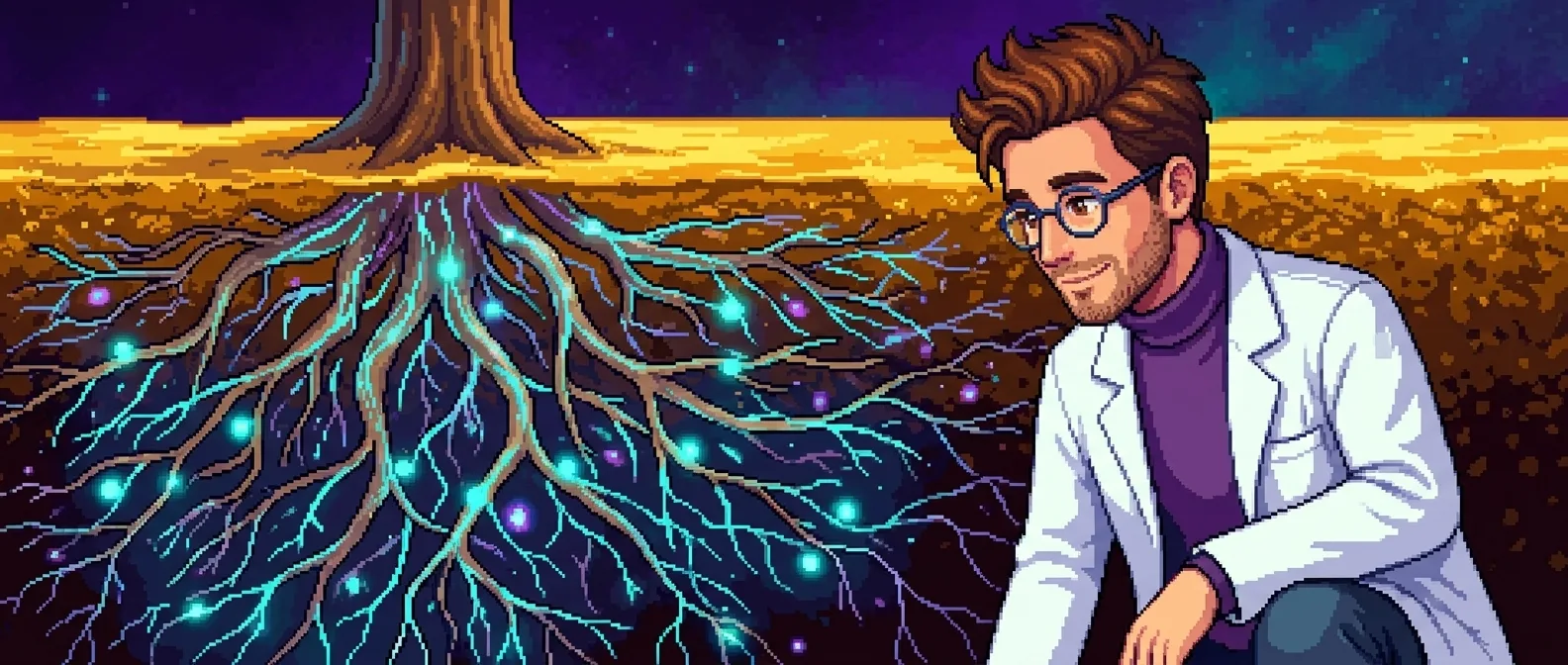
A single gram of soil contains tens of thousands of microbial species. Billions of individual bacteria. Fungi threading through in networks so vast they connect trees across entire forests. An invisible web of life so complex that sequencing all of it is like dumping 10,000 puzzles into a blender and trying to reassemble them simultaneously.
And the people mapping this web? High school students in California.
A Thousand-Dollar Revolution
Traditional DNA sequencing requires institutional lab access, six-figure equipment, and a PhD who knows how to use it. The Oxford Nanopore MinION costs about $1,000. It’s a USB-powered sequencer the size of a stapler. A complete classroom setup — sequencer, flow cells, sample prep kit, laptop — runs $3,800 to $4,500. Less than a school basketball program’s annual equipment budget.
The World Genome Academy is being designed to put these sequencers in K-12 classrooms, paired with curriculum aligned to the Next Generation Science Standards (NGSS — the framework California and most states use for K-12 science), so that students work as researchers. Classroom experiments with known outcomes are how every scientist learns the craft — and the design goal here is that students go one step further: real metagenomic data about their local environment, soil, water, air, of the kind professional marine biologists and soil scientists can actually use.
That distinction matters — not because practice experiments aren’t real learning, but because there’s a particular thrill when your data is something the world actually needs.
The California eDNA Atlas
The plan’s centerpiece is the California eDNA Atlas — a living, queryable map of environmental DNA across the state, built up from every sample students collect as classrooms come online. California is the nation’s top agricultural state — roughly $59 billion a year in farm cash receipts — with about 840 miles of coastline. Understanding its microbial ecology isn’t academic curiosity. It’s food security, ocean health, and climate adaptation.
Picture what that looks like at scale: students in Ventura County sequencing soil from regenerative farms, adding local data to a well-documented pattern — across dozens of studies, cover cropping lifts soil microbial abundance by about 27%, activity by 22%, and diversity by 2.5% — and students on the coast contributing readings toward the kind of marine-biodiversity monitoring the Ocean Biomolecular Observing Network coordinates. And from the first sample, the design commits every data point to FAIR + CARE principles — findable, accessible, interoperable, reusable, with Indigenous data sovereignty protections designed into the governance model from day one rather than bolted on.
The clock is ticking to capture this data before it’s gone. Species are disappearing faster than we can catalog them. A Library of Alexandria lapping up on the beach, and we’re racing to read the scrolls.
Why Students, Not Just Scientists
The credentialism problem in science isn’t just unfair — it’s inefficient. There are nearly 6 million K-12 students in California. There are fewer than 20,000 wildlife and marine biologists in the entire United States. If you want to build a biodiversity monitoring network that covers a state this large, you need distributed sensors. Students with MinION sequencers are those sensors.
But the deeper argument isn’t utilitarian. It’s epistemic. When a sixteen-year-old sequences eDNA from a Venice Beach water sample and finds microbial signatures that don’t match any reference database, she hasn’t just contributed data. She’s encountered the edge of human knowledge. She knows something that no one else on Earth knows yet. That’s not an educational exercise. That’s the real thing.
Science belongs to everyone — not as a slogan but as an engineering requirement. The tools are portable. None of this is hypothetical as a design — the data infrastructure is specified as federated, the governance as cooperative, the curriculum written to state standards — and the first classrooms are what comes next.
The Pattern That Scales
WGA isn’t designed to be just a science education program. It’s a template for what happens when you trust communities with real tools and real problems. The same pattern — distributed sensing, federated data, community ownership, institutional partnerships without institutional gatekeeping — applies to environmental monitoring, public health surveillance, agricultural optimization, and a dozen other domains where the bottleneck isn’t technology but access.
Every layer of attention reveals a layer of structure, and every layer of structure reveals a new question. The invisible web under your feet has been there for billions of years. We’re just now building the tools to see it. And we’re building to put those tools in the hands of the people who will inherit the planet those microbes sustain.
Come look.